



Depending on where you are, the leaves have started changing color and stores have started stocking seasonal treats.
Before we know it, the holiday season will be upon us once again.
For the hospitality industry, it’s one of the busiest and most lucrative periods of the year. At the same time, it’s one of the most competitive times.
What are you doing to make this year a resounding success at your property?
Here’s a tip: Your results hinge on having a proactive pricing strategy that balances demand, occupancy, and profitability.
Wondering how to implement that? Read on for a simple roadmap to optimize your pricing before December demand peaks and maximize year-end revenue.
Stay till the end to see the results the Hotel Panorama got after implementing some of the following steps.
7 Steps to a successful holiday pricing strategy
1. Analyze last year’s performance
Look at last year’s KPIs first:
Booking pace: How far in advance did people book?
Average daily rate (ADR) and revenue per available room (RevPAR): Were they what you hoped? Why or why not?
Channel mix: where did guests book their stays, your website, an OTA, or maybe a travel agent?
Group business: which groups booked with you? Is there a chance they’ll return?
Yes, that’s a lot of questions. But it’s important to get crystal clear on what happened last year and pull learnings from it.
This doesn’t mean you should treat this year the same as last year.
Instead, use these insights to kickstart this year’s holiday campaign and get off on the right foot.
2. Forecast demand early
Many people look forward to their winter break the entire year and plan holidays far in advance. You probably already detected the first signs of demand in the market now.
Identifying and capturing this early demand is a critical part of your end-of-year success.
Leverage future demand insights to track market developments, develop a suitable pricing strategy, and know when to adjust your approach.
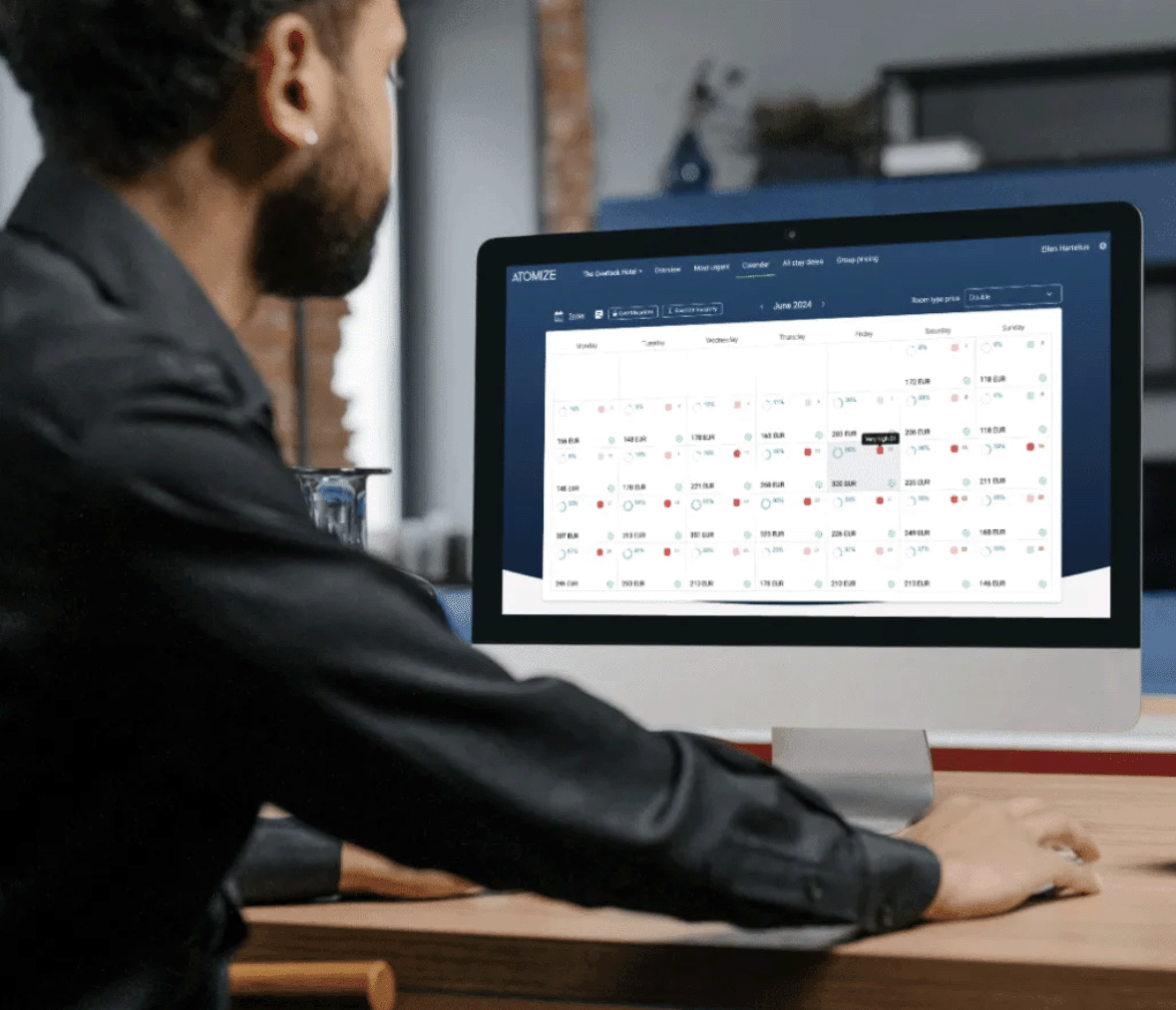
Atomize provides these insights in an easy-to-read calendar view.
See early on when travel intent grows and know which dates to focus on, this week and a month from now.
3. Implement dynamic pricing
Understanding future demand was the first part. Now, it’s time to implement the best pricing strategy, a dynamic one.
There’s always a chance for unexpected demand shifts. Adjusting your rates up or down accordingly will help you maximize your revenue in every circumstance. You’ll capitalize on demand peaks with higher rates and avoid outpricing yourself on slower days.
Ideally, you’ll adjust rates in real time to make the most of every demand development.
4. Consider minimum stay restrictions
Minimum length of stay restrictions can be your ticket to maximizing business during peak periods and even driving bookings on lower-demand days.
Here are two examples:
A hotel in a city with a popular Christmas market sets a stay minimum of two nights on weekends in December (i.e., Fri-Sun). This optimizes capacity over the whole weekend.
A resort in the Caribbean sets a seven-day minimum over Christmas and New Year’s Eve. This reduces operational workload and keeps the hotel full between the two major holidays.
If you’ve used stay restrictions in the past, check what worked and see how you can optimize this year’s approach.
If this is new for you, explore different options and see how they impact your pace. If it drops, adapt it to better suit your target market.
5. Leverage segmentation
Holidays are a unique time when you might not be able to rely on your usual business mix. These periods are often more leisure-heavy. You can still attract other segments though.
Work with your marketing team to create attractive options for leisure guests, corporate clients, and groups.
Consider exclusive deals for companies wanting to treat their teams or leadership at the end of the year. This can boost your corporate groups segment even in the winter season.
Finally, work with a few choice partners to source high-value group business with interesting packages.
6. Plan for upselling and packages
Upselling and packages are a fantastic way to maximize total revenue, not just room revenue. That’s true, especially around the end of the year, when travelers are in the mood to splurge on special experiences.
Here are a few ideas to inspire you:
Upsells and cross-sells
Early check-ins or late check-outs are straightforward and highly popular
Breakfast add-ons, dinner bookings, and spa treatments increase TRevPAR
Paid upgrades drive incremental room revenue
Other extras (e.g., Champagne in the room) make the stay more special
Which other add-ons can you offer to wow your guests with a unique stay?
Packages
Multi-day packages, e.g., pay 3 stay 4, help you fill slower demand days mid-week
Experience packages come with add-ons like a fancy dinner at your restaurant or a spa treatment
Get creative with themed activities like a food tour of the local Christmas market or cookie baking with your pastry chef
What other unique services and experiences can you combine into an irresistible package?
7. Automate for agility
There are so many things to do to make the most of this winter season at your hotel. And that’s on top of all the operational day-to-day tasks.
It’s time to take some work off your plate with automation.
Take dynamic pricing as an example. It’s impossible to do it manually due to the quick changes and endless amount of data you’d have to gather and go through.
An RMS like Atomize with automatic dynamic real-time rate updates is your best friend here. It helps you react instantly to each market shift and make the most of every change. How? Atomize sets the ideal rate for you each time there’s a change in the market.
Don’t worry, you’re still in control of your prices. You set rate guidelines for public holidays, school breaks, etc., to ensure rate suggestions always stay in the range you want.
A real-world success story
Hotel Panorama, a ski resort in Slovakia, has leveraged Atomize to drastically boost its results, especially during peak periods and over the holidays.
“Atomize helps us act more aggressively when demand is high. It highlights the dates that need price changes and shows the ongoing demand trends,” says Miroslav Sczyrzicki, the property’s general manager.
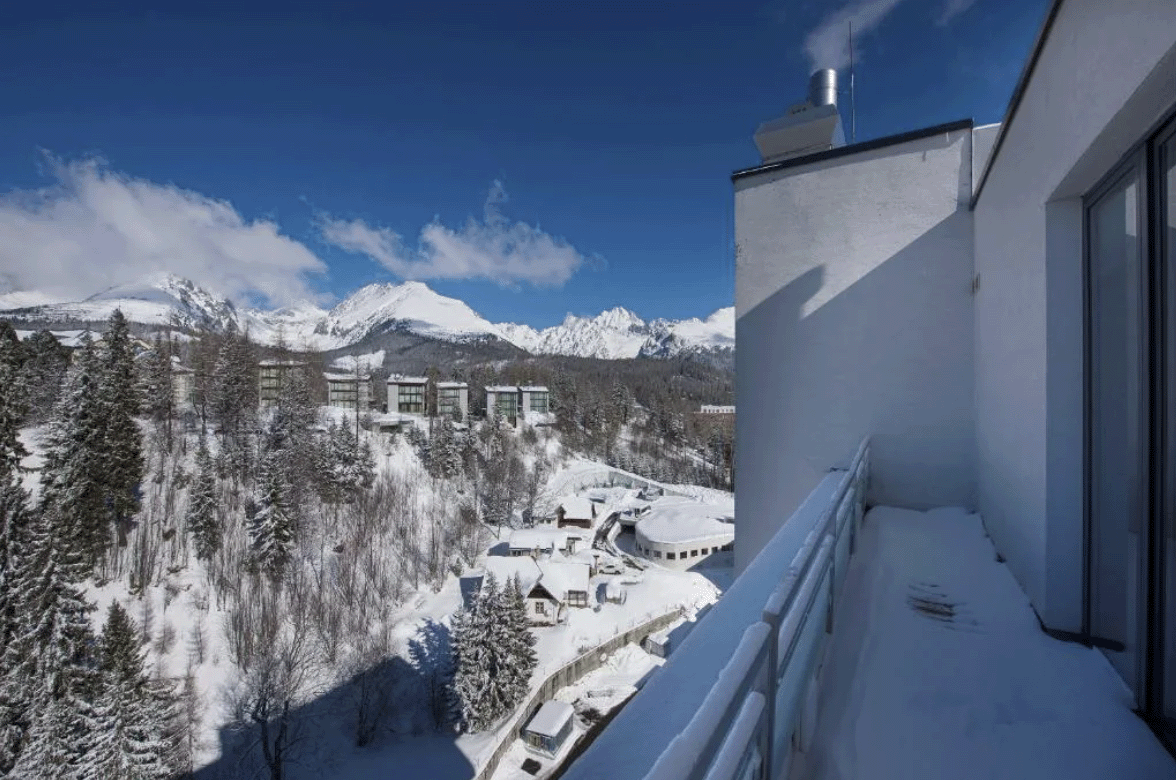
Since implementing Atomize and adjusting their revenue strategy, Hotel Panorama increased its RevPAR by 24.67%. At the same time, ADR grew by 29.70% year-over-year.
Now that you have your roadmap and you’ve seen the impact the right approach can have on your revenue, it’s your turn.
Try the steps that work for your hotel, so you can seize every revenue opportunity this winter.
It’s time to make this your most successful holiday season yet. If you want Atomize to be part of this plan, reach out to us today.