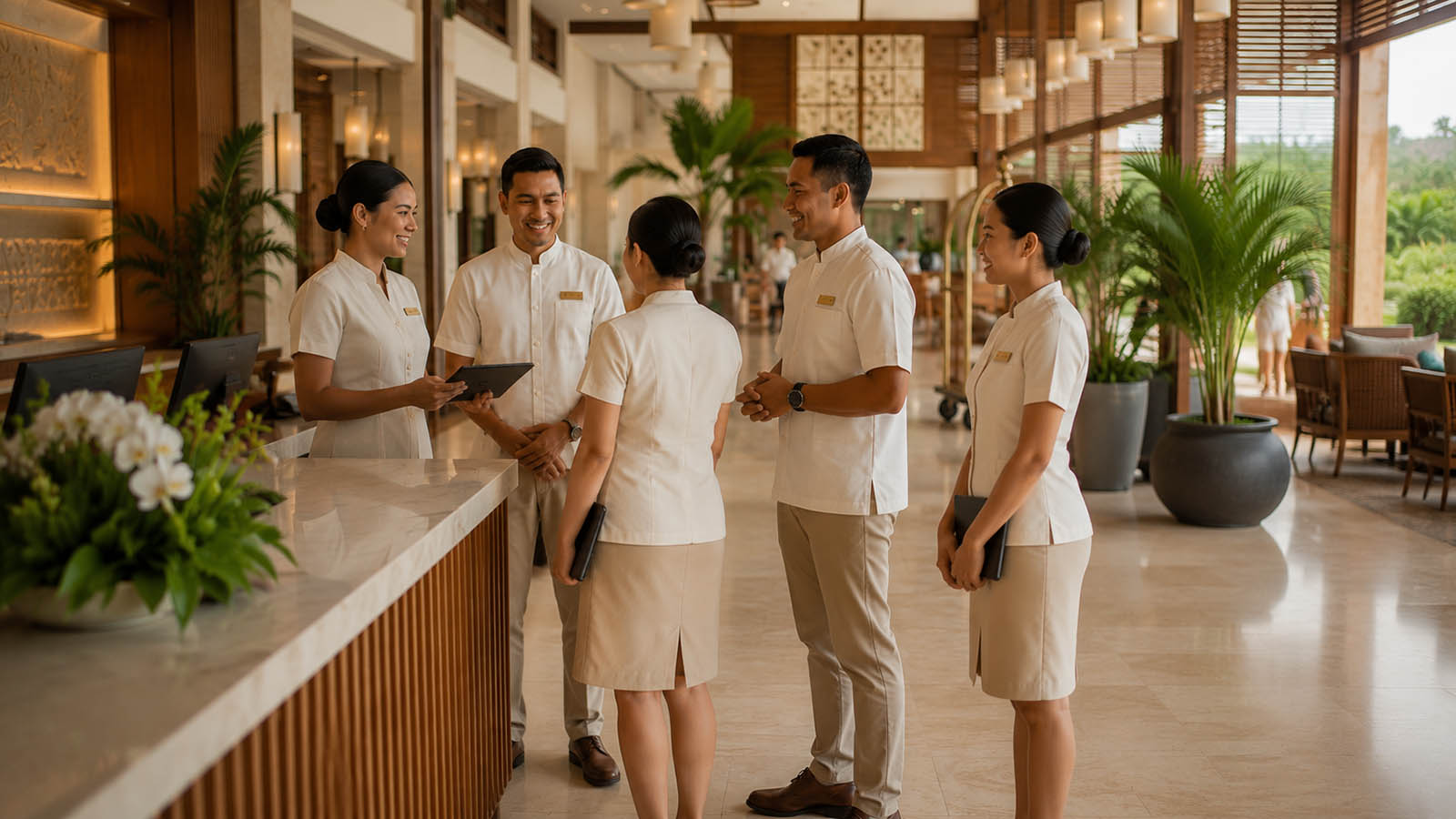



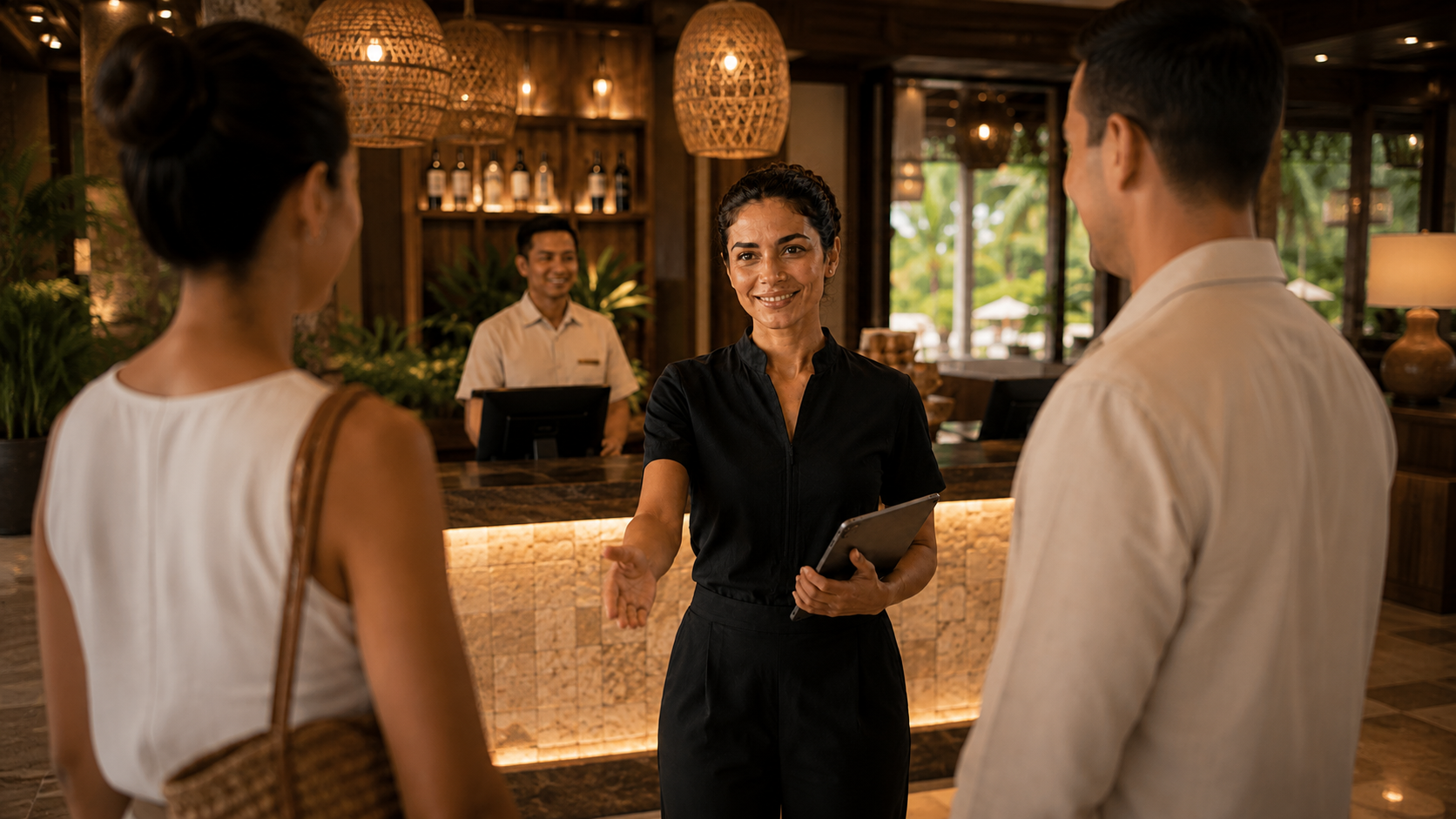
Guests do not experience a resort as a collection of departments.
They do not see the handovers between teams, the workflows behind a request or the systems staff move between to make things happen.
They see one resort.
When they make a request, they expect the resort to understand it, act on it and follow it through. Yet operationally, that single experience can look very different.
A Digital Request. A Very Manual Process.
Consider something as simple as a guest asking for a birthday cake.
To the guest, it is one request made to one resort.
Behind the scenes, it may involve Guest Relations, Food & Beverage, the kitchen, payment approval, delivery coordination and a final check that everything happened as promised.
The request may begin digitally, but what follows can still depend on emails, WhatsApp group messages, spreadsheets, phone calls and manual follow-up.
The simplicity of the request is exactly the point.
If something this straightforward requires several systems, departments and handovers, the complexity belongs to the operation behind it.
The Conversation Is Only the Beginning
Guest-facing technology has made it easier for guests to communicate and for teams to respond quickly.
But responding to a request and delivering it are two different things.
Once the message is received, information still has to reach the right teams, ownership has to be clear and the request has to be followed through until the promised outcome is delivered.
A seamless conversation can therefore sit on top of a fragmented operation.
The guest sees the message. The resort has to manage everything that happens next.
Departments Are Necessary. Departmental Journeys Are Not.
Resorts need departments. They create expertise, accountability and structure.
The challenge is that guest journeys rarely stay within them.
A maintenance issue may involve Guest Relations, Engineering, Housekeeping and Front Office. An activity booking may affect transport, payment, equipment and communication across several teams.
Each department may perform its part well.
But the guest experiences the outcome as a whole.
That creates a contradiction: the guest is having one experience while the resort is managing multiple operational fragments.
When Everyone Sees Their Part, Who Sees the Whole?
Most resorts are not short of information.
Housekeeping may see room status. Maintenance can see open work orders. Guest Relations can see conversations. Restaurant and activity systems can see reservations.
The problem is that these are often different views of the same guest journey.
A task being completed does not necessarily mean the request has been fulfilled. A message being answered does not mean the promised action happened.
And every time information is copied, forwarded, re-entered or passed manually between systems, there is another opportunity for something to be delayed, duplicated, misunderstood or missed.
Where systems stop, staff often fill the gaps through email chains, WhatsApp groups, spreadsheets and follow-up calls.
Everyone may be able to see their part.
Who can see the whole journey?
The Human Operations Layer Reappears
This is where the 'Human Operations Layer' becomes important.
When technology does not connect the operational journey, people do it themselves.
They carry information between systems, forward emails, post updates in WhatsApp groups, update spreadsheets, check whether another department has acted and chase anything that is running late.
Each manual step keeps the operation moving, but it also creates another point where information can be lost, duplicated or misinterpreted.
The guest does not see those handovers.
They simply experience whether the resort delivered what was promised.
This is why fragmented operations can remain largely invisible. Resort teams are exceptionally good at compensating for them.
The guest experiences one resort because the people working within it continually make the operation behave like one.
The Human Operating Layer carries the complexity created by the gap between a single guest journey and a
fragmented operating model.
What If Technology Followed the Journey Instead?
Perhaps the question should not simply be how individual departments can become more efficient.
It should be how the resort can operate more effectively as a whole.
What if a guest request could move across the operation without being repeatedly re-entered, reinterpreted or manually chased?
What if every team had the context it needed, ownership remained clear and managers could see the complete journey rather than a collection of departmental snapshots?
That does not require departments to disappear.
It requires the technology supporting them to recognise that the guest journey moves between them.
Building a Better-Connected Operation
Building a better-connected operation does not have to mean a major overhaul of the resort’s entire technology environment.
The opportunity is to reduce fragmentation by bringing more of the guest journey, departmental workflows and operational visibility into one connected environment.
That may mean replacing some existing systems, integrating with others and removing the spreadsheets, emails, WhatsApp group messages and manual follow-up that currently sit between them.
Instead of staff acting as the connection between disconnected systems and processes, the operation itself becomes more connected.
This is not about replacing people or removing the judgement and flexibility hospitality depends on.
It is about allowing those strengths to be focused where they create the most value: caring for guests, solving problems and delivering exceptional experiences.
At Eleanor, this is the challenge we are focused on solving.
Because guests already experience one resort.
The operation behind that experience should work as one too.