


For years, hotel F&B has often been treated primarily as an amenity rather than a serious profit centre. But as hotels set their budgets for 2027, IRIS, the global leader in digital F&B ordering and guest experience solutions for hotels, believes there is a significant opportunity to change that mindset - using technology to capture more guest spend, improve operational efficiency and make F&B a much stronger contributor to overall hotel performance.
As guests place more emphasis on culinary experiences, hotels need to do more than offer great F&B: they need to unlock investments that make it as easy as possible for guests to discover, order and spend throughout their stay – and mobile ordering is key to achieving this.
So, here are IRIS’s top tips on how mobile ordering can maximise hotelier’s 2027 F&B budget spend to unlock rapid ROI:
1. Go digital and make spending effortless
Every extra step between a guest wanting something and being able to order it creates an opportunity for that sale to disappear.
Mobile ordering removes those barriers. Guests can browse, order and pay from their own device - anywhere, at any time and without downloading an app. They can pre-order breakfast, schedule delivery, arrange collection or order room service without making a call.
And convenience can translate directly into revenue: IRIS clients have reported 20–40% increases in average transaction value through digital ordering.
That makes mobile ordering much more than a guest-facing technology investment. It creates a digital shop window for all your F&B outlets whenever - and wherever - a guest decides to spend.
2. Build upselling into every order
Digital ordering turns upselling from a manual process into an automatic revenue opportunity.
Menus can highlight related items, upgrades, add-ons and promoted specials at the point of purchase - whether that's an extra side with dinner, a bottle of wine with room service or pastries with a morning coffee.
Pre-ordering can also help hotels capture spend earlier, making it easy for guests to schedule tomorrow's breakfast before they start considering alternatives.
The aim isn't simply more orders. It's more value from every order.
3. Turn the whole property into an F&B revenue opportunity
Why restrict F&B mobile ordering to the restaurant or room service?
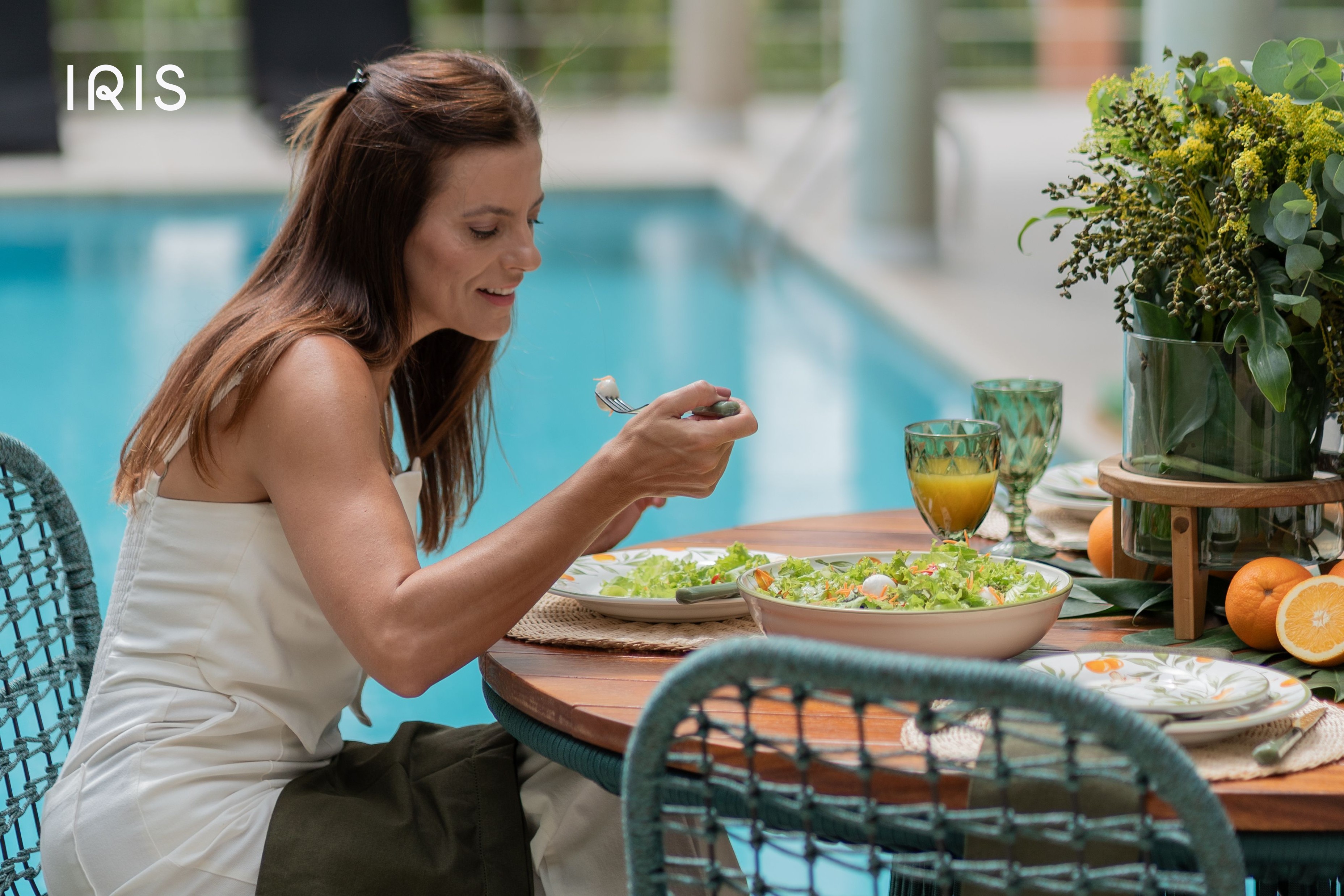
Hotels can offer it across other outlets in their property to boost sales. With strategically placed QR codes, and guests can order online wherever the moment takes them - from guestrooms, pools and beaches to lobbies, terraces, spas and meeting spaces.
That could mean coffee while working in the lobby, cocktails by the pool, lunch on the terrace or late-night room service.
For resorts and properties with neighbouring villas or residences, click-and-collect and takeaway services can extend that commercial reach further still.
Plus, mobile ordering can turn previously unmanned areas into revenue-generating spaces without the need to permanently staff them.
Every guest touchpoint has the potential to become an F&B touchpoint.
4. Give guests menus that inform - and sell
Digital menus can do far more than list dishes and prices.
High-quality imagery and engaging descriptions help drive appetite and discovery, while ingredients, allergen information and dietary attributes give guests greater confidence when ordering.
Hotels can also make updates instantly. Sold out of a dish? Remove it. Launching a seasonal special? Add it. Changing a price? Update it without reprinting a single menu.
Guests get accurate, current information, while hotels gain greater control and consistency over how their F&B offer is presented.
5. Remove the language barrier
International guests shouldn't have to struggle to understand what's on the menu.
Multilingual digital menus allow guests to browse dishes, descriptions, modifiers and allergen information in their preferred language, helping them order more confidently and accurately.
It reduces friction and makes the experience more inclusive - while giving every guest a better opportunity to explore the full F&B offer.
6. Integrate ordering with your hotel technology
Digital ordering delivers the greatest operational benefits when it connects directly with the hotel's existing technology.
Integrated POS and payment systems mean orders go direct from the guest's device to the kitchen or bar, removing phone calls, manual order-taking and duplicate data entry.
Kitchen teams can start preparation sooner, staff workload is reduced and service becomes faster. IRIS clients have reported delivery-time savings of more than 10 minutes per order.
The best technology doesn't add another process. It removes one.
7. Free up staff time
When guests can self-serve for F&B orders, staff spend less time answering phones, entering orders and handling administration.
That gives them more time for the interactions that really matter: welcoming guests, handling special requests, and delivering memorable hospitality.
Technology should complement, not replace personal service.
Make F&B work harder in 2027
Budget season is about identifying investments that will genuinely move the business forward.
Hotels already have the guests, kitchens, bars, pools, terraces and teams. The opportunity is to make those existing assets work harder by making F&B easier to discover, order and buy.
A digital F&B ordering platform is one of those rare solutions that boosts incremental revenue and guest convenience, while reducing operational friction. It also gives hotels a digital ordering experience that matches — and in many ways exceeds — what third-party platforms such as Uber Eats and DoorDash offer, helping operators retain F&B revenue within their hotels.
If digital F&B ordering isn't already on the budget line, now is the time to put it there and maximise every opportunity in 2027 and beyond.