


Hotel groups are losing thousands of hours to manual, repetitive work. This article explores where time leaks happen, why inconsistency blocks scale, and how automation helps teams regain control and capacity.
Let’s talk about a silent problem that’s costing hotel
groups thousands of hours a year, and quietly strangling their ability to
scale.
Across operations, finance, and reservations, hotel teams
are buried in repetitive manual work. Every day, talented staff spend hours
fixing profiles, updating rate codes, distributing reports, or reconciling
commissions; tasks that could be handled faster, better, and error-free by
automation.
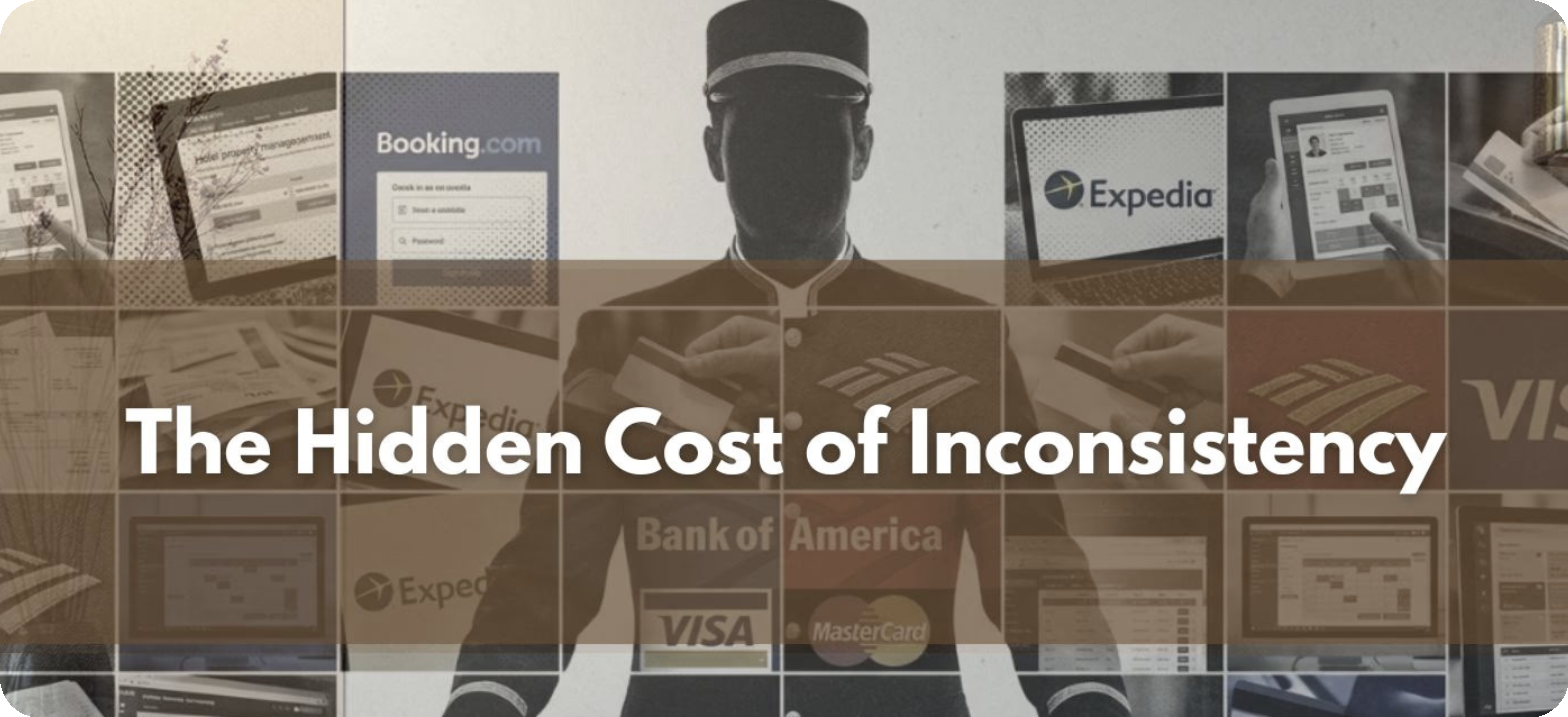
The problem isn’t just inefficiency. It’s inconsistency.
Different hotels within the same group follow different procedures. Data
quality suffers. Standards slip. And no matter how (good) your teams are, your
group simply can’t scale with confidence if every property runs on its own
version of "how we do things here."
So let’s name the real issue: Hotel groups are massively
leaking time due to manual, repetitive, and poorly standardized processes.
How much time is actually lost?
Consider these examples from hotels we've worked with:
·
A major hotel group saved 72 full working days
per month by automating a single process: rate code maintenance across their
CRS.
·
One single hotel can lose 467 hours per year
just managing manual financial reconciliation. This includes daily tasks (365
hours), error investigations (78 hours), and training new staff (24 hours).
·
Manually creating and distributing daily pickup
reports, including a thorough data analysis? That’s 60 minutes per property,
per day, or approximately 45 working days per year per property burned on
repetitive reporting alone.
And this doesn’t even account for time spent fixing guest
profiles, merging duplicates, or recovering from VIPs who didn’t receive the
treatment they were promised because their data wasn’t flagged correctly.
Manual work isn’t just slow, it’s risky
When every hotel in your group runs its own SOP for
reservations, payments, or VIP handling, the result isn’t flexibility. It is
operational inconsistency.
Without automation:
·
Standards vary between properties
·
Compliance gaps emerge across markets
·
Data accuracy degrades over time
·
Staff make avoidable errors, and spend hours
fixing them
·
Training becomes harder as processes become
harder to document
We’ve seen hotel groups penalized for financial reporting
discrepancies because two properties submitted slightly different OTA numbers.
We’ve seen VIPs go unrecognized because one property flagged them in the PMS,
while another forgot.
This isn’t a people problem. It’s a process problem.
And automation is the solution.
Empowering your people
When hotel groups automate, we don’t see layoffs. We see
relief.
Automation doesn’t sleep. It doesn’t forget. It doesn’t get
distracted during shift change. Bots can process rules-based workflows ten
times faster than humans, operate 24 hours a day, and ensure compliance with
every click.
More importantly, automation ensures that every hotel in
your group follows the same playbook. Rate codes are loaded the same way.
Reports are distributed on time, every time. Commissions are reconciled without
chasing emails. And guest data stays clean, structured, and useful.
The result is simple. Your teams can do what humans do best:
handle exceptions, focus on the guest, and create memorable experiences.
Across RobosizeME clients
alone, workflow automation has saved over 200,000 labor hours per year so far.
That’s not theoretical. That is actual time hotel staff have won back without
hiring more people or overhauling core systems.
Why we’re hosting a webinar
The operational pain points explored in this article are not
isolated cases. They are patterns we see in hotel groups of every size, across
every market. They are symptoms of a deeper issue: the way work is still being
done in too many properties, every day.
That is why we are organizing a webinar.
Not to pitch a product, but to bring clarity. We want to
take a step back, share what we have learned working with hotel groups facing
these exact challenges, and create space to reflect, learn, and ask questions.
If these issues sound familiar, I hope you will join me on
February 23 at 1:00 PM GMT. You will leave with a clear framework to assess
your own workflows and identify where immediate, measurable impact is possible.